Resilience supports sustainable growth
Building a business is hard. You might as well build it to last.
That’s particularly true because creating resilience has multiple benefits for your business right now:
- Awareness of risks helps you guard against them and create additional protection as you grow
- Implementing processes and procedures limits errors and reduces risk, enabling scalable growth and boosting profits
- Delegation and decentralization not only reduce bottlenecks and points of failure, they free up management time to allow you to focus on moving your company forward
So, while creating processes and other backfilling can seem like the “boring stuff”, the kind of thing you can put on the back burner while you concentrate on growth, strong companies do both. Because creating stronger processes now builds the base for everything you want to do tomorrow.
How quickly could you notice – and adapt to – a major shift in your industry?
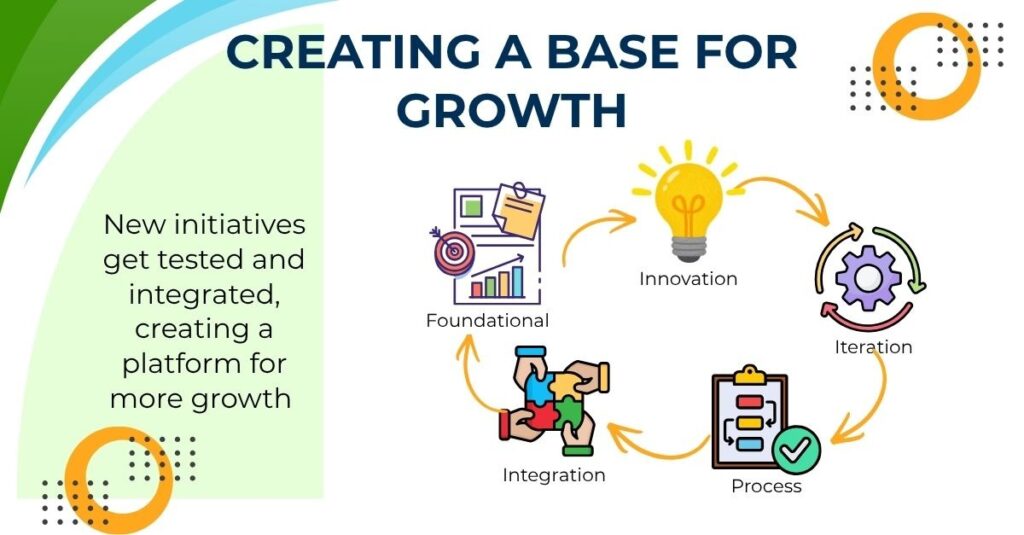
Building structure into growth initiatives
Growth requires improvisation. Sure, you test, you trial, but there’s always some element of, “let’s give this a try”. And it rarely works right the first time.
So you iterate. Keep what’s working; fix what’s not. If you’re fortunate, you may soon have a workable new product, service, market, partner, customer type or some other path to additional growth.
Great! Time to move on to the next thing, right?
But if that’s all you do, you’re missing an important step, exposing your company to risk and undermining your basis for future growth.
Before – or while – moving on to the next initiative, you need to:
- Create processes, documentation, structure around the new activity to make sure it’s solid, everyone knows what to do, no need to scramble or improvise with every transaction
- Integrate the new initiative. You may have wanted it somewhat segregated during the testing phase, but it now needs to be part of business as usual
- Make it foundational: part of planning, strategy, hiring, budgeting – all the actions that drive your business
Does growth make your business more resilient or less so?
Assess the risks
Building structure into your business can help reduce course-of-business risk: staff errors, miscommunication, lapses or oversight. But those aren’t the only threats to your business.
There are also outside threats: competition, industry conditions, the economy. Those are important and real, but there’s not much you can do to control them.
What you can control, however, are the weak spots in your own business, such as:
- People: Do key staff members represent weak links, bottlenecks or other types of risk? Do you?
- Processes: lack of process can be a risk, but so can excessive or unwieldy systems that overwhelm staff or impede growth
- Competition: what’s your sustainable competitive advantage? How can you strengthen, protect – or create – one and improve it as you grow?
- Diversification: you probably understand that diversification strengthens your product or service lineup, but it’s true for other key elements of your business as well, such as suppliers, partners, customers and customer segments, channels
- Margin: a solid operating margin gives you pricing and operational flexibility in good times and bad
- Culture: creating an appealing place to work has tangible benefits. A good corporate culture helps you attract and retain people, produce a consistent, compelling customer experience and benefit from a more motivated, resilient, resourceful staff
- Financial cushion: gives you the ability to withstand adversity, seize opportunity and take chances that lesser-resourced competitors might not be able to
What’s one assumption your entire business currently depends on?
Are people (including you) the problem?
People are everything to a young business: operations, brand, often a large part of the service or product itself. So it’s not surprising that they can also be a source of risk – and a key element in building resilience.
- Key staff are often crucial to your operations. They’re on the front lines with customers, know how things get done, what works and what doesn’t; they’re the face of your company and brand. This also makes them a source of potential risk:
- Departure of key staff may mean losing crucial business knowledge if they alone possess key information that has not been shared or systematized
- Knowing their importance, they may – even with the best of intentions – act as gatekeepers, slowing processes, inhibiting communication and impeding growth
- They can be resistant to change, preferring the way they’ve always done something to proposed improvements
- The founder, much as you care about the business, can be a major source of risk.
- Centralization of control and decision making, while necessary for important decisions, can slow growth and frustrate key employees if it’s too pervasive
- Failure to delegate or empower staff may mean the company can’t operate effectively if you’re not around to oversee everything
Is there one employee whose departure would seriously damage your business?
Build in process as you grow
In a young, fast-growing business, the temptation can be to just work harder. And you’ll certainly have to work harder and do more as your business grows.
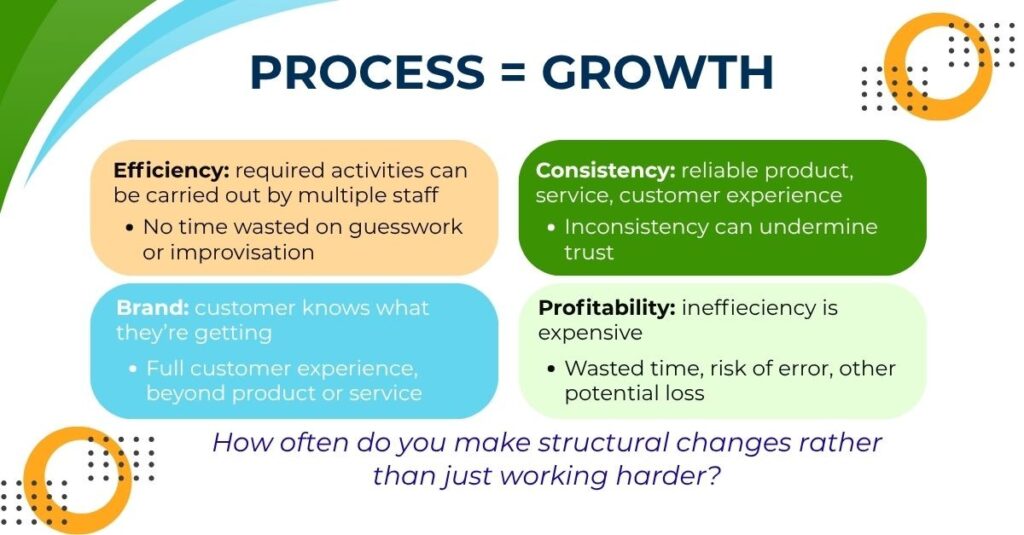
But established operations should be scaleable, you should be able to grow more with less incremental effort. Implementing processes as your business develops lets you build a scalable business – your efforts go farther while building a foundation for continued growth:
- Standardizing processes means things are done consistently, efficiently and can be accomplished by any staff member familiar with the process
- That consistency extends beyond the product or service alone, meaning the full customer experience is reliably strong every time
- This builds your brand by creating the reliability and trust that attract and retain customers
- There’s also a meaningful financial impact, as consistency improves efficiency (time is money!) and reduces the risk of potentially costly errors
How often do you make structural changes rather than just working harder?
Stay ahead of the competition
A focus on process can also improve your company’s competitive position. It starts from knowing what your relative strengths are, or where you hope to develop them.
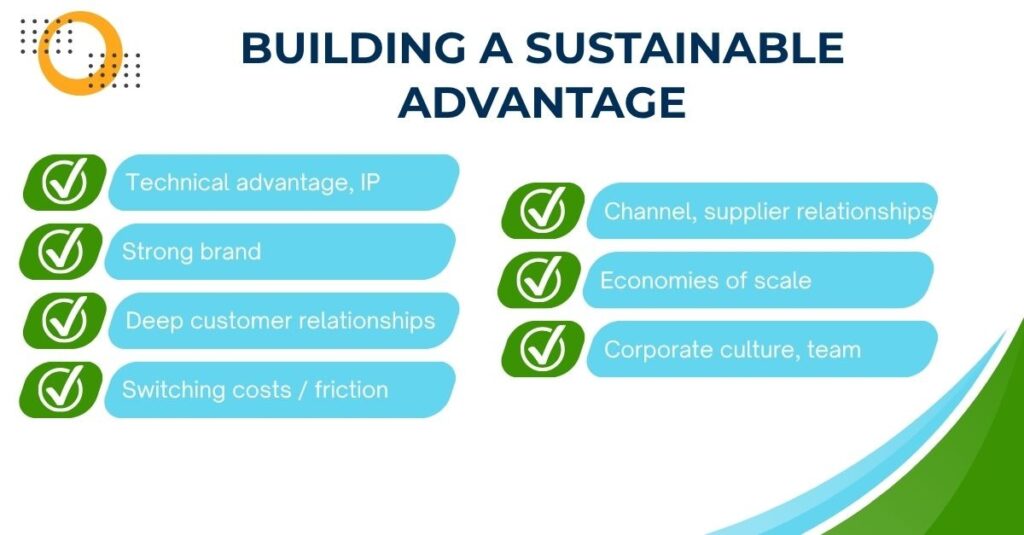
Contrary to popular belief, this rarely means having a patent or some whizzy IP. Most companies competitive positioning is built on:
- A strong brand
- Deep relationships: with customers, suppliers, channels, partners and others
- Friction or switching costs so that moving to a competitor presents a challenge for the customer
- Economies of scale that give your company an advantage. Even a modest-sized company can develop these with the right suppliers or partners
- A team and culture that makes yours a compelling company to work and stay with
With focus, this competitive advantage can improve as you grow; without, you risk becoming more generic, losing the edge.
What are you doing that will make your business harder to compete with as you grow?
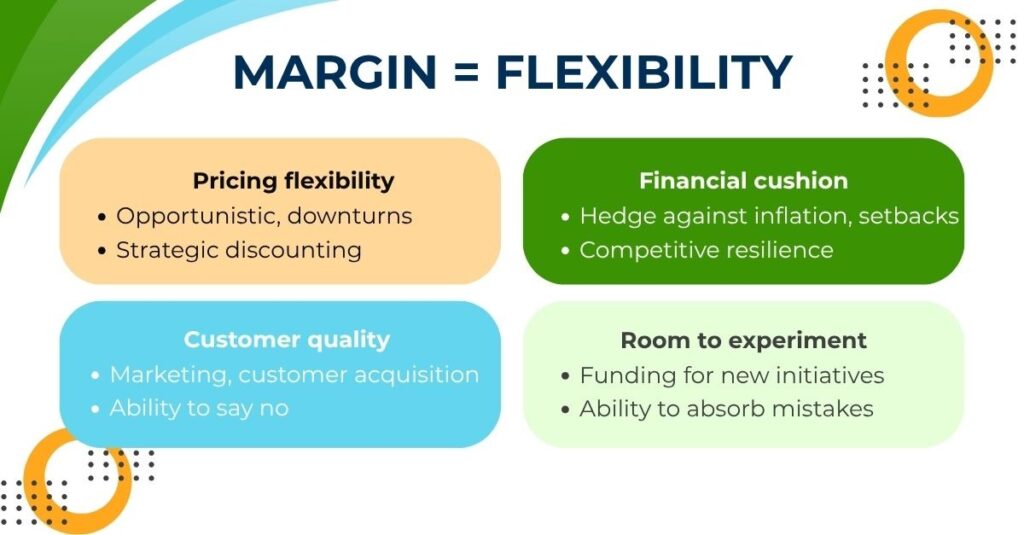
Margins = resilience + growth
Improving processes, removing bottlenecks and strengthening your competitive position help drive improved profits. But margins themselves are also a key element in making your company both resilient and ready to grow.
A stronger margin gives you:
- Strategic pricing flexibility: allowing you to respond opportunistically to downturns or industry conditions and giving you the tactical ability to drive desired customer behavior (for more, see Module 5: Is your pricing working for you)
- Financial cushion: protecting your company against inflation or other economic events and providing competitive resilience
- Better quality customers:
- Profit margins can fund marketing and customer acquisition
- Pricing flexibility to attract and retain better quality customers
- Ability to say no to unprofitable customers (for more, see Module 6: Are you built for your best customers?)
- Room to grow: the extra margin can help fund new initiatives and provide a cushion to absorb the inevitable mistakes and setbacks on the road to growth
Does growth improve your economics or require you to spend more and more to support it?
Culture is infrastructure
All of these efforts – processes, competitive positioning, financial margin – are driven by you and your staff. So while creating an appealing workplace is a valid goal itself, there are also financial and structural reasons to do so.
- Consistency and quality: no matter how special your product or service, how good your underlying processes, the customer experience is determined by the people they interact with. Motivated, engaged staff who understand what they’re doing and why provide a better, more consistent experience
- Decision making: a decentralized, empowered staff allows those closest to the issue to make faster, better-informed decisions. (They must, of course, have sufficient training and understand the limits of their decision-making ability)
- Recruitment and retention: high quality service and responsiveness are difficult to achieve if staff don’t stick around. Turnover also costs money, delays growth and increases the likelihood of error. Building a company where employees want to work – and new recruits want to join – has multifaceted benefits
Are you creating a culture, or is it just evolving based on how you operate?
Your Goal: Growth + Resilience
Growth involves taking chances, doing new things; this can destabilize a company.
If you’re building in resilience as you grow, though, those effects can and should be temporary. And a company engineered to be sustainable should have the processes, diversification, competitive strength, financial cushion and – perhaps most importantly – culture to withstand any such temporary effects.
So building in resilience as your company evolves needn’t involve a trade-off with growth; building your company to last is what enables more and more profitable future growth.
If you were starting today, what would you build differently to make the business more resilient?
Want more information on growing your business?
Watch the video to learn more about how to develop, review and maintain a marketing strategy that works for your business
Access our full list of questions to help you determine where and how to focus your strategic efforts
Reducing unnecessary complexity is another key way to make your business more resilient. Read more here and access our full list of questions