Know your customers
“The customer is king.” But not every customer. Not all the time.
Customers vary. Your actual customers probably differ from those you originally targeted. And they differ amongst themselves.
Every business needs to be able to serve a range of customers, but success depends on:
- Knowing who your customers are and how they’re changing
- Determining (and defining!) who your “best” customers are
- Making sure your value proposition and messaging target the customers you want to reach
- Understanding where your customer base and their needs are headed
Does your “target customer” profile match your sales data?
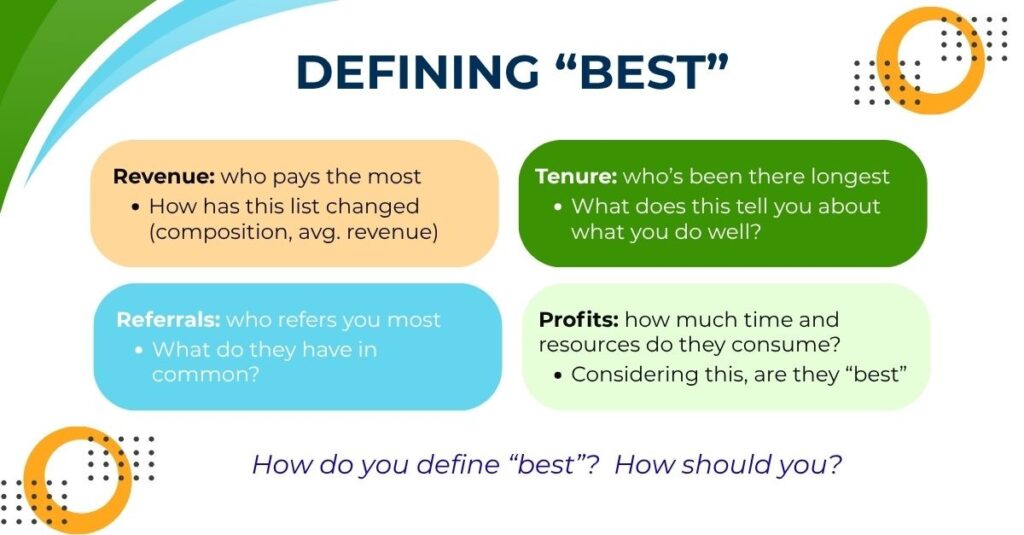
Who’s “the best”
Every business hopes to focus on its best customers. But it’s not always simple to determine who those may be. Are they:
- Who pays the most
- Who’s growing fastest
- The longest tenured, most loyal
- Those who provide referrals, testimonials, leads
- Those most profitable, taking into consideration what they pay and the direct costs and the resources needed to support them
Nor are any of these static groups. The composition of each is changing as new customers join the ranks and others drop out or diminish. Individual customer’s revenues and contribution wax and wane. Their relative contribution shifts based on what else is happening throughout the business and customer base.
How do you define “best”? How should you?
Where is the customer heading?
However you define your “best” customer, it’s almost certainly not your original target.
Instead, you want to look at your current business and customer base to consider:
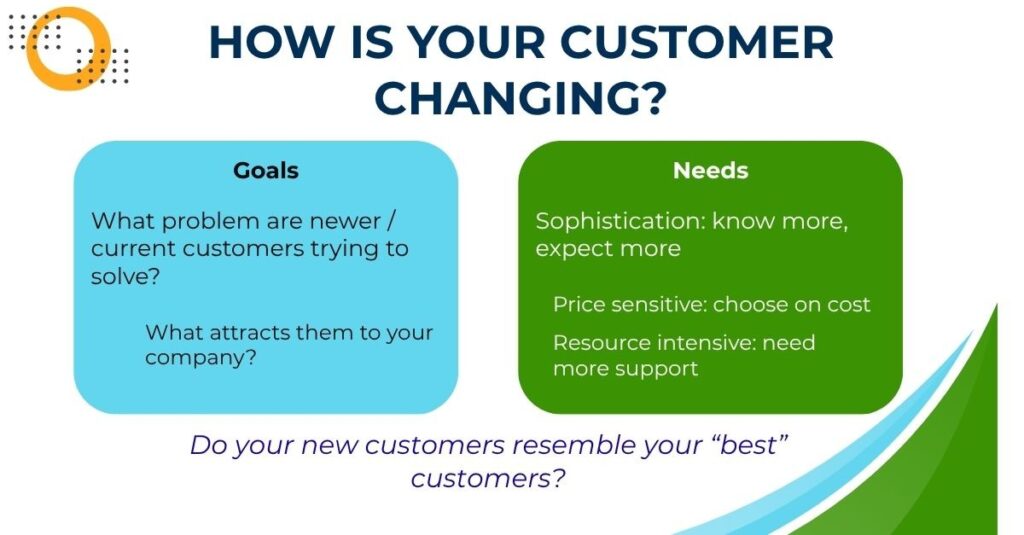
- Goals: what value do your best customers see in your company? How is that evolving?
- Are newer customers looking to solve the same problem as prior year’s good customers?
- Are they finding you, engaging and buying for the same reasons as in the past?
- Needs: what does it take to attract, support and retain customers and how is this changing
- Sophistication: do current customers know more, expect more, comparison shop more broadly or deeply
- Price sensitivity: how and when does pricing figure into the buying decision relative to past customers
- Resources: how much is needed to support the customer throughout the relationship lifecycle and how is this evolving
One way to evaluate this is to look at your most recent new customer additions.
- Do they resemble past customers?
- If so, are they similar to those you’d previously defined as your best customers?
- If not:
- Should you redefine your target customer profile, or
- Are you not attracting the customers you need to grow and sustain your business
Do your new customers resemble your “best” customers?
What do your best customers value?
Identifying your best customers is just the starting point; it’s a snapshot of where things are now. To stay relevant, let alone grow, you need to be able to anticipate their needs and move in that direction.
A good place to start is to really examine who your best customers are, not just in terms of demographics or profile, but what commonalities do they have and how do these make them a good fit with your business:
- What do they value about your company? This includes not only your product or service, but the overall relationship. It may or may not be what other customers value, but it’s important to focus on your best customers’ opinion
- What do they have in common? A simple demographic category may not be sufficient. Look at psychographics. W hat’s special about this group? The answer may lie with them, or with you: how they first learned about you, the initial interaction, the particular ways they use your product or service or the demands they make of your organization.
- Who are you working to attract and support? If your best customers aren’t your target, what aspect of your efforts is working with them? And, importantly, might there be ways to shift or add that would better suit – and help you add to – this important group?
What would you need to do to serve more of your best customers?
Are you focusing efforts where it matters most?
It can sometimes feel as if certain customers are more trouble than they’re worth. The truth is: some are.
Of course, you can’t target your efforts with pinpoint precision. Some unexciting clients may evolve into great customers, or refer those who do. All customers deserve attention and support, at least within the scope of what’s profitable.
But spending time on subpar clients can have a measurable impact on your business:
- Time: Efforts on behalf of less profitable customers consume time that could be spent supporting, identifying and attracting more of your best clients
- Profits: Once you consider the full cost of attracting, supporting and retaining a customer, even seemingly attractive sales may result in little or no net profit
- Energy and resources: you and your team are human. The drag on morale and company resources that comes from supporting mediocre customers – particularly when you recognize those efforts costs real money, eroding profitability – can limit the enthusiasm and energy needed to attract and support customers who are truly additive to your business
What would happen if you focused entirely on your best customers?
What’s next?
You need to understand what your best customers look like and value. But they’re not standing still, so you can’t either.
Your best customers are changing, so you need to know where you’re going – and, hopefully, get there first – if you want to stay relevant, let alone grow.
The customers themselves are evolving, facing new challenges which can affect how and whether they need your service or product. And the group is changing: some longtime customers may no longer be a good fit; new categories or cohorts may arise to take their place.
To help stay ahead, ask yourself these questions:
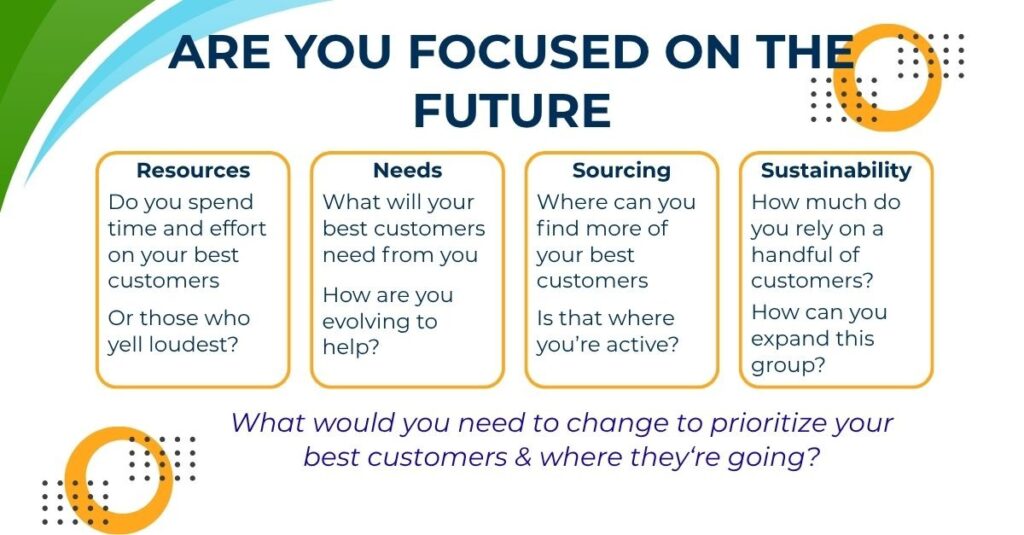
- Resources: Do you spend time and effort on your best customers, or those who yell the loudest? Prioritizing the former not only gives you a better chance of retaining them, it positions you to understand and anticipate their evolving expectations.
- Needs: What your best customers need from you will also shift, beyond the problem you help them solve:
- The way you interact with them
- The information and support you provide
- Pricing structure, staffing and other aspects of the relationship.
- Sourcing: you (hopefully!) know where to find and how to approach those who fit your “best customer” profile. As they evolve, and as you target new groups, you may need to broaden or shift where and how you reach out
- Sustainability: How broad and diverse is your “best customer” pool? How reliant are you on one or a handful? To grow and thrive, your business needs to expand the number and range of core clients
What would you need to change to prioritize your best
Want more information on growing your business
Watch the video to learn more about how defining, targeting and building around your best customers
Access our full list of questions to help you determine how you can add to and support your business’s best customers
Pricing structures can attract customers and improve profitability; read more about how to use pricing strategically and access our full list of questions to customize pricing for your business