What’s it all about?
For many business owners, marketing is a constant struggle.
Most founders had limited or no marketing experience before launching their business. It’s something they have to pick up, painfully, as the business grows.
And there’s so much to it! So much to do, so many channels. Get those emails out. Feed the algorithm. Post, post, post!
It can be exhausting. So you can only hope it’s doing what you want: building your brand, getting you customers, closing sales.
But hope’s not a strategy. And without strategy
- All that marketing activity may or may not be producing the effect you want
- You have no way to assess effectiveness
- You can’t correct a problem you don’t notice
Do you have a marketing strategy, or just a collection of tactics?
Strategy v. tactics
Any business activity needs both an underlying strategy and a tactical approach to achieving it. Marketing’s constant, multifaceted, almost overwhelming nature makes that particularly true.
Strategy is what you’re trying to accomplish and why. In marketing, this means:
- Who are you trying to reach
- What do you want them to believe or do
Of course, you want to reach potential customers and you want them to buy. Easy, right?
Not so much. Your strategy may shift for different groups or at various points in your business:
- Awareness helps you reach new customers or markets
- Education helps when launching a new offering or positioning yourself as a premium provider
- Acquisition seeks to convert that awareness or knowledge into a sale
- Retention seeks to ensure that existing customers stay engaged and keep buying
- Win-back looks to re-engage with former customers who’ve become inactive
Tactics are how you achieve these goals.
- Channels are how your reach customers: social media platforms, email outreach, trace shows, partnerships
- Method is how you get your message across: PR, advertising, influencers, content marketing, SEO
Could you describe your marketing strategy in three sentences or less?
Who are you talking to?
As you assess how best to reach and convince the customer, it’s important to note which customer you’re talking to:
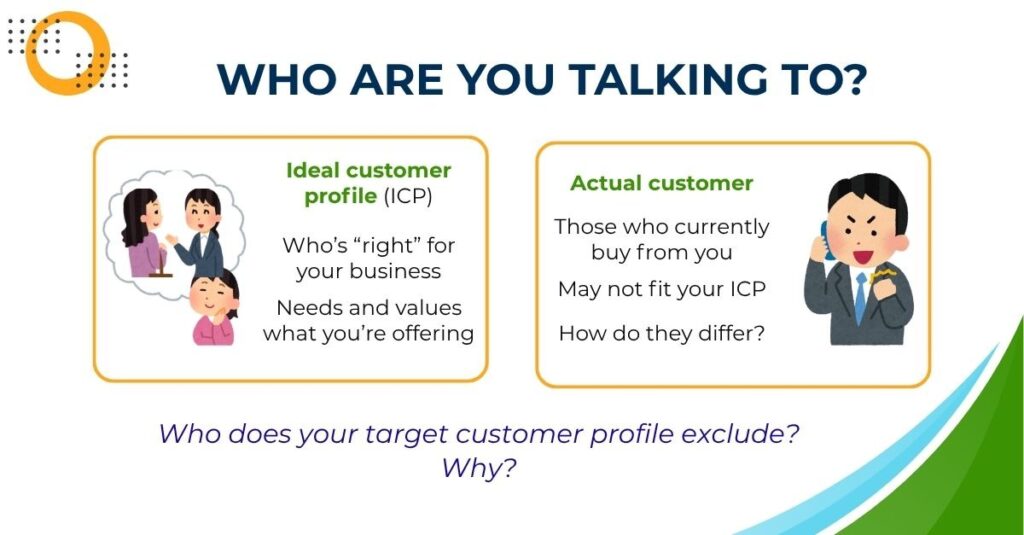
- Your ideal customer profile (“ICP”) is the person you want to reach, the direction you want to go. When targeting new customers or markets, ICP is often your only reliable definition
- Actual customers generally differ from the ICP. That’s fine. But if you’re focused on retention, current offers or win-back, you want to talk to your existing customers.
(For more on the difference between ICP and current customers, as well as other customer issues, please refer to Bootcamp #6: Are you built for your best customers)
Actual customers and ICP will often differ; often the ICP represents the direction you want to go, the customers you’re looking to add. But if the groups diverge too strongly, or if a new-client initiative delivers candidates that differ markedly from the ICP, it’s worth taking a closer look:
- Did you choose the wrong target
- Is the target still valid, but you’re using ineffective channels or methods?
- Does your ICP exclude groups (particularly those who’ve responded) who might be worth reconsidering?
In considering how you might adjust or add to your ICP based on actual results, it’s worth considering:
- How efficient is it to reach your ICP, especially compared to the prospects you’re already attracting with existing efforts?
- Which group buys more or is more profitable – or is likely to become so? (Learn more about customer profitability here.)
- Which has greater potential?
If your real customers don’t match your ideal profile, is your strategy wrong, or is your targeting wrong?
Are you telling them why?
The second part of strategy is what do you want the target to believe or do. It may be attractive to just state the objective directly – We’re the best! Buy now! – that’s often ineffective.
Instead, you want the target customer to understand:
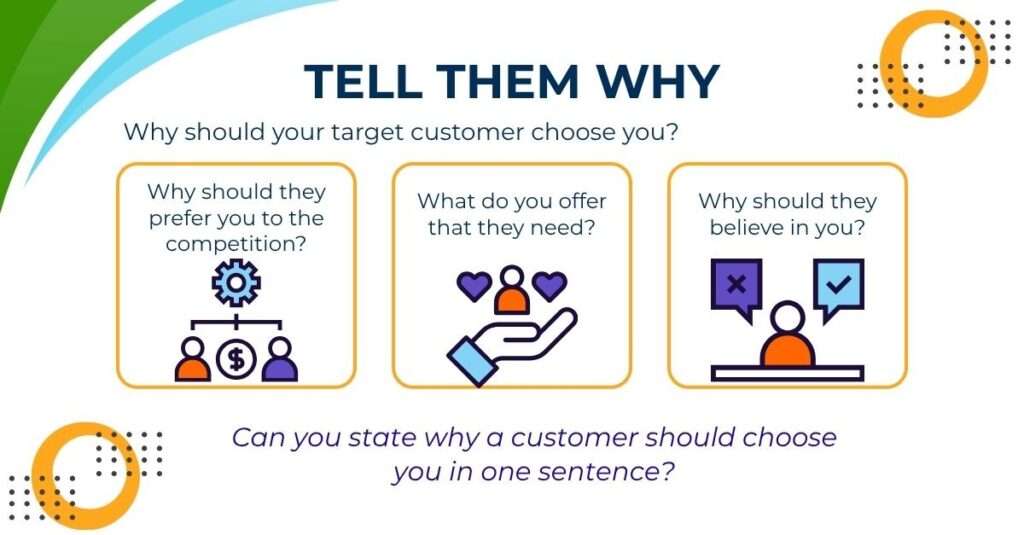
- Why you’re better than and different from the competition
- What you offer that suits their needs or solves their problems
- Why should they believe in you?
Can you state why a customer should choose you in one sentence?
Do you have a true strategy
Strategy starts with knowing who you’re talking to and what you hope to achieve. But there’s more than that. A true strategy should be:
- Differentiated: if a competitor could use your messaging without anyone noticing, it’s hard to believe you’re really underscoring your company’s unique value proposition
- Up to date: businesses change, customers evolve, you learn more about both with each passing day. Your marketing strategy needs to keep up
- Practicable: if the strategy lives only in your head, no one else can help you. As a young business, this may not be an option, but you want to build a strategy that allows you to delegate or outsource once you’re able
Could someone else in your business execute your strategy if you weren’t there to explain it?
Tactics: putting strategy into action
While methodology and messaging are crucial, a lot of marketing comes down to making sure you’re meeting your customers where they are. This means choosing the channel that best suits the target you’re trying to reach. You could market hearing aids on TikTok, but is that where your audience is? (Unless you want to influence their children or grandchildren.)
Often, channel decisions are made based on what you presume you “should” use or what “ought” to work. That can be a decent way to start, but it’s worth reevaluating regularly.
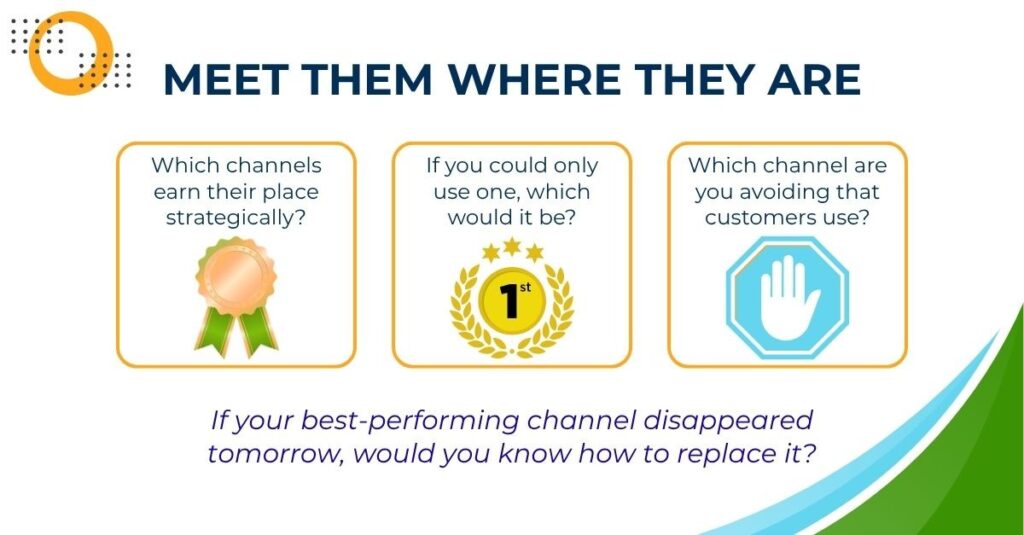
- Channels should earn their place in your line up: your competitor may show up at that big trade show every year or be a seeming wizard at email (How do you really know?), but if it’s not working for you, either try to figure out how to use it better, or redirect your efforts to another channel that works
- Understand why they work: take a look at your best performing channels. What is it about the mix of target, methods and messaging that works there? How can you sustain that value? Is there anything you can learn or tweak for other channels?
- Follow your customers: it’s not enough to simply review your current channels. Customers change, channels evolve; which channel are you avoiding that your target customer uses?
If you had to cut every channel but one, which would you keep? Why?
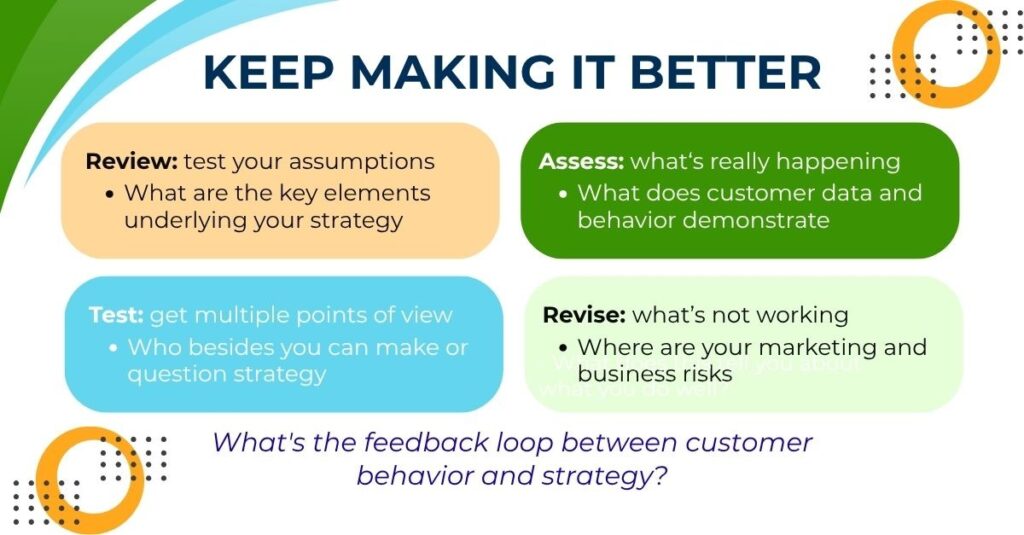
Keep making it better
Like every other aspect of running a business, marketing strategy should be something you regularly revisit and revise.
- Review:
- What were your original goals?
- Are these goals still valid given changes to the economy, your industry, your customer base?
- Assess: what results are you seeing, how are customers responding and how do these compare to your goals?
- Test: try to get other points of view to help evaluate and modify strategy. You already know what you think; what do your staff, advisors, even customers have to say?
- Revise: what’s not working – or what may stop working given the trends you foresee? Where are you at risk and how can you address it?
What’s the feedback loop between customer behavior and strategy?
Want more information on growing your business?
Watch the video to learn more about how to develop, review and maintain a marketing strategy that works for your business
Access our full list of questions to help you determine where and how to focus your strategic efforts
A good marketing strategy is built around your plans to grow and strengthen your business and effective customer targeting and segmentation. Read our posts to learn more