Use what you’ve learned!
You started your company with passion and designed it with care. You were determined to help the customer solve a problem or reach a goal. You had personal experience, did your research, tested and developed a solution you knew was valuable.
It was a great idea, but it was just an idea, just the beginning. That launch design was your prototype, your best judgement.
But you hadn’t yet encountered a customer. You’d never asked for a sale. You didn’t need to deliver or support the product or service.
Now you have. Many times. And it’s probably not what you’d envisioned.
That’s good! It means you’ve learned, gathered the kind of knowledge no one can get from assumptions and plans.
So why wouldn’t you use that knowledge? It’s not an admission you were wrong; it’s proof you were right. You knew there was a problem, you were certain customers wanted a solution, you were sure you could deliver.
You’ve just learned more about how to do each of those things better.
What did your original plan assume that’s no longer true?
Staying true to what matters
Change is scary. It means doing new things in new ways, moving away from activities that were comfortable, even if ineffective.
More fundamentally, though, it can threaten your sense of your business.
You started the company with clear goals, based on what really mattered to you and the customer you wanted to serve. If you tweak the product or service, reprioritize or target different customers, will you be compromising your goals?
Not at all. Evolving your business based on what you’ve learned in the real world means:
- You better understand actual customers’ real problems
- You’re solving them in a way that works
- You can reach and support them more effectively
- In short, you’ll be better positioned toward your objectives
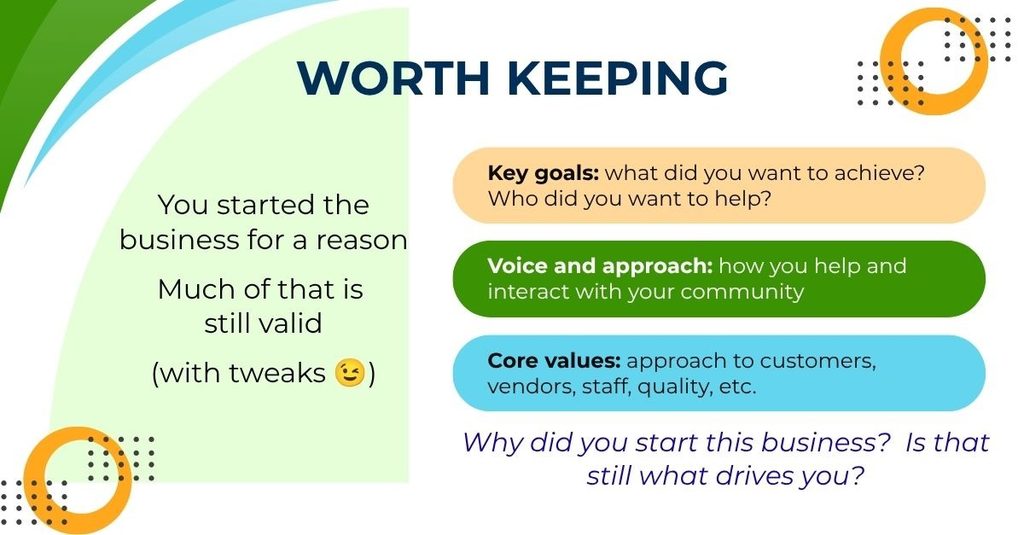
The key is to keep your core objectives in sight:
- Central goals: Who do you want to help? What problem are you seeking to help them solve? Why is this important?
- Identity: What’s your role and reputation in the industry or community? What should customers see and value?
- Core values: what do you want your company to represent? How did you define “quality”? How did you hope to interact with staff, vendors, partners and others?
Why did you start this business? Is that still what drives you?
Review and revise
You’ve worked this hard. You’ve learned this much. Why not use it?
The goal isn’t to junk your entire business plan and start again. It’s to take what you’ve learned in the real world, from real customers and do what you set out to do (with whatever tweaks you think make sense), only better.
The goal is sensible evolution. All businesses must evolve, because the world, industry and customers do.
If you don’t adapt and adjust, you risk:
- Hewing unthinkingly to your original plan, which will increasingly diverge from the real goals and customers you want to help
- Throwing out what’s working or what matters. If your business is truly not working, you may need to rethink and reconceptualize; if it’s okay but could be better, take what you’ve learned and improve what needs fixing.
You don’t undermine your goals or plan by revising tactics. You might, however, if you refuse to learn from and improve based on what that plan allowed you to experience.
What are you still offering or doing because it seemed like a good idea when you started?
Follow the customer
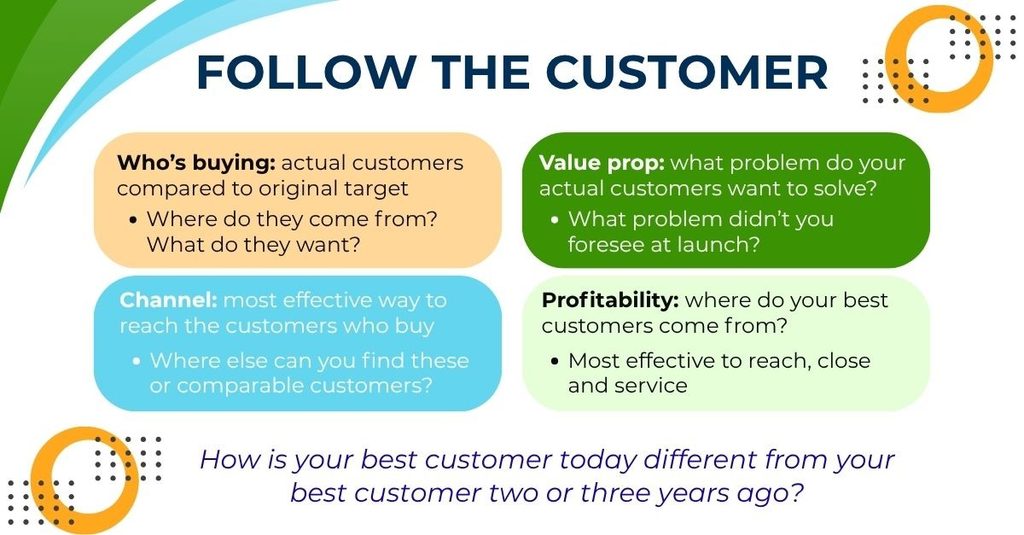
You started this business to help a customer, so what do they want?
Look at your actual customers – and maybe a few of the near misses. Forget what you thought they’d want, how you assumed they’d behave and start learning from and adjusting based on what they really say and do.
- What are they actually reacting to, positively or negatively?
- For less popular products or services, what’s the issue? Are you serving a need? Is there an initial positive reaction but no close? Where are you losing customer interest?
- The problem may be coming from inside the house. Is the service or problem okay, but marred by flaws with the sales, close or support process? The customer reaction matters, but it may not always be the issue.
What feedback have you been ignoring because it doesn’t fit the original vision?
With what you know now…
The way to revise and improve is to start from first principles. What’s important to you, to your customer, to your vision and values? You did that when you launched, but now you know so much more.
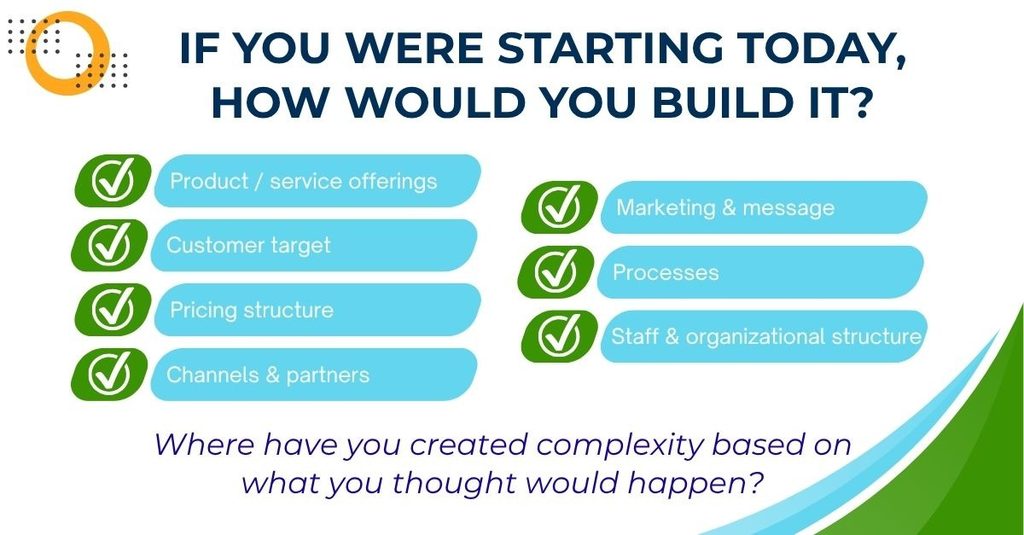
If you were starting today, with those goals in mind, how would you design or do things differently, based on what you know now. This could include:
- Product or service offerings: which do you prioritize, to whom
- Target customers, customer profiles: who you’re focusing on and why
- Channels and partners: what’s really effective? Why are you still involved with those that aren’t (or how might you improve them)?
- Marketing and messaging: are you talking about what matters to your real customers in a way that resonates with them? Are you reaching them where they are?
- Pricing: does it still match the offerings and cost structure of the business you now have? Is it properly incentivizing customer behavior?
- Process: now that you know what customers want and all that’s involved in selling to and supporting them, do you have the right processes? Do you need better ones? Or might you want to simplify processes that have grown too complex?
- Staffing and organizational structure: do you have the right people in the right places interacting in a way that serves the customer and the company?
Where have you created complexity based on what you thought would happen?
Want more information on growing your business?
Watch the video to learn more about how to develop, review and maintain a marketing strategy that works for your business
Access our full list of questions to help you determine where and how to focus your strategic efforts
Learning from and evolving to meet the needs of your best customers is crucial. Learn more at Bootcamp #6: Are you built for your best customers and check out the full list of questions here
Applying what you’ve learned to pricing can benefit you and your customers. Learn more at Bootcamp #5: Is your pricing working for you? and access the full list of questions here.
Access the full list of business bootcamp topics and questions here