Preparing for Smart Growth
Launch marks step one of your company’s success
When you’re planning, launch feels like a destination, the culmination of all that work. It is, but it’s also the beginning — an important first step on the road to continued, sustainable growth.
Viewing it this way helps take some of the pressure off. Launch is no longer an all-or-nothing leap into the unknown. It’s another chance to learn, test, adjust and make sure you stay on track.
More importantly, it’s a strategy that limits cost, time and risk while providing flexibility that will enhance your chances of success, not only in the launch, but throughout your company’s continued growth.
The “MVP” approach to launch… and growth
We’re calling this the “MVP” approach. We talked about the MVP, or minimum viable product, but this is Minimum Viable Process: a strategy of expanding in stages, each one focused, goal-oriented and designed to let you test, learn and grow.
As with the MVP, the advantages of this approach go well beyond just saving money. A staged approach has many benefits:
- Stay focused: a launch means mastering unknown skills, developing new processes, some central to your success; others one-off chores you’ll rarely need again. Every one has its own risks, contingencies and challenges. By minimizing the number of tasks involved, you can concentrate on a few, key initiatives.
- Minimize investment of time and money: doing twice as much won’t necessarily take you twice as far. But it will cost at least twice as much, since there will be more unknowns and less time to do things yourself. Doing more is riskier and takes longer, since you’ll be making more simultaneous and contingent decisions, greatly increasing the opportunity for error.
- Maximize flexibility: by doing fewer things with greater focus, you give yourself the chance to learn, improve, adjust future plans based on experience and move forward with greater confidence and capability.
Plan and prioritize
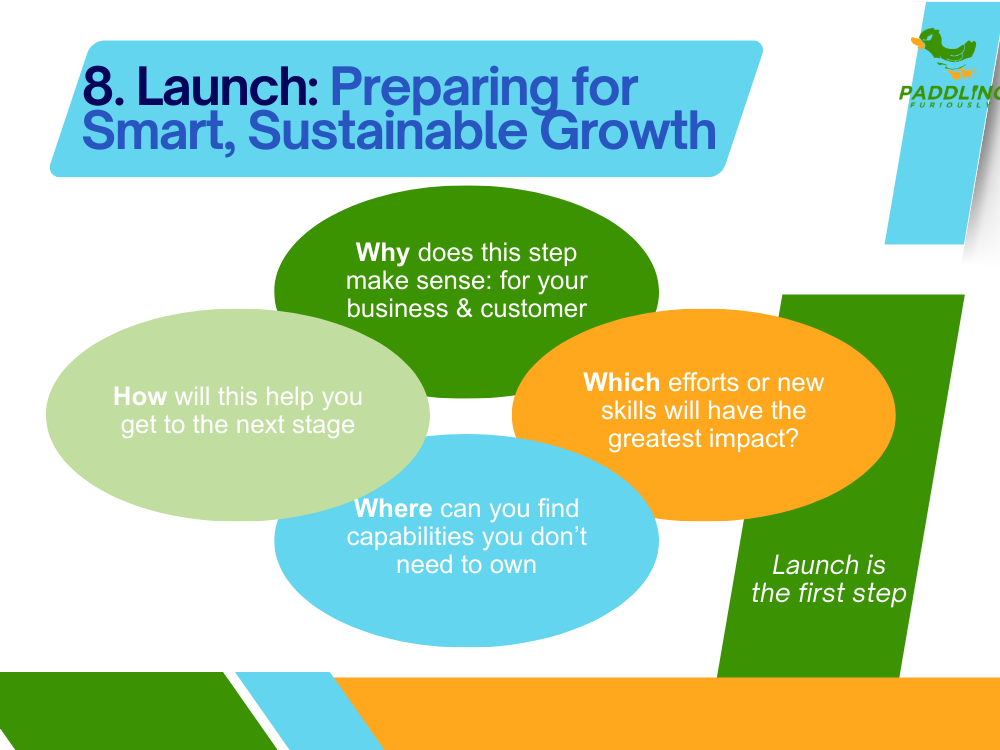
For launch – and every subsequent phase – clarify your goals before you start planning. What’s key at this stage? What do you need to prioritize? What can wait?
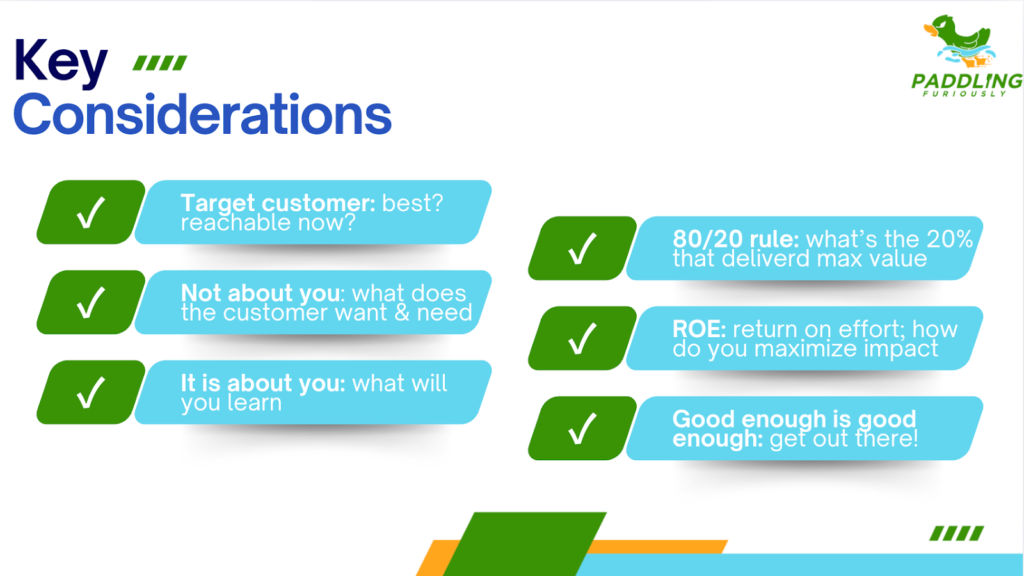
Concentrate on reducing unnecessary activities. Focusing your efforts where they’re likely to produce the greatest impact is a very effective way to reduce unnecessary expense and risk.
So, ask yourself:
- Who: is the customer for this product or service, at this stage?
- Why: will this offering, supported as you intend, appeal to them?
- What: will you learn or prove in this stage that will prepare you to move on?
- Where: should you focus your efforts? Which activities are likely to have the greatest impact?
- How: can you reduce the time and money needed by eliminating or offloading lower priority activities or spending?
- When: are you ready? Remember: ready doesn’t mean perfect; good enough is good enough.
What don’t you need?
Stripping out unnecessary costs or activities doesn’t mean doing less; it just means doing things smarter.
One key way to do this is to distinguish between what you need and what you need to own or control. For example:
- Location: you need a place to work or sell to customers, but that doesn’t mean you need to invest in an office or store. Instead, can you timeshare, sublease, do a popup?
- Equipment: instead of purchasing expensive equipment, can you access it on a pay-per-use basis only when you need it? Might you be able to barter or access it some other way?
- Salesforce, brand, marketing: by subcontracting, white labelling or partnering, you can let someone else sell your product or service, freeing you up to concentrate on to concentrate on thrilling – and learning from – customers.
Importantly, none of these preclude you from ultimately owning, buying or developing these or other capabilities yourself, if and when they’re needed.
Set yourself up for smarter decisions
Eliminating unnecessary investments not only reduces your capital needs, it lets you test different alternatives – store layouts, equipment choices, sales channels, marketing strategy – without significant investment of time or money.
Then, as your business grows, you’ll be better prepared to:
- Prioritize investment: which of these makes sense to invest in first? Which can wait?
- Make smart choices: when you do purchase the equipment or hire the marketing person, you’ll have a much better sense of what works for your business, your management and selling style, your product or service.
Be generous… once you have a sale
Another way to minimize the cash needed to grow is to make sure your spending tracks your income. So as you’re looking for alternative sources for your location, equipment, marketing or other needs listed above, try as much as possible to align the payments to income:
- Instead of renting a space or equipment, see if you can negotiate a revenue share
- Pay partners or distributors a commission, finders fee, referral fee or other structure that relies on sharing the earnings from actual sales, rather than upfront payments
- For consumer-based businesses, consider refer-a-friend discounts or discounts on future purchases.
All of these not only minimize the need to pay out cash before you’ve received it, they incentivize the people or businesses you’re paying to act on your behalf, because it raises their income as well.
Launch basics
To launch successfully, you’ll also need some basic corporate infrastructure:
- Corporate structure: a corporation or LLC will limit your personal liability
- Financial:
- Bank account, credit or debit card: centralize all company transactions in a dedicated account, so you can track your finances
- Bookkeeping: you needn’t hire a bookkeeper, but the earlier you start tracking your financial performance, the less catch-up and confusion you’ll have later
- Web site: even a simple, do-it-yourself site will help people find you and understand your business
- Phone number, email: lets you contact people and allows them to reach you while shielding your personal contact information
- Social media: even if your initial plans are limited, try to reserve accounts you might want in the future and standardize names across platforms
Iterative growth
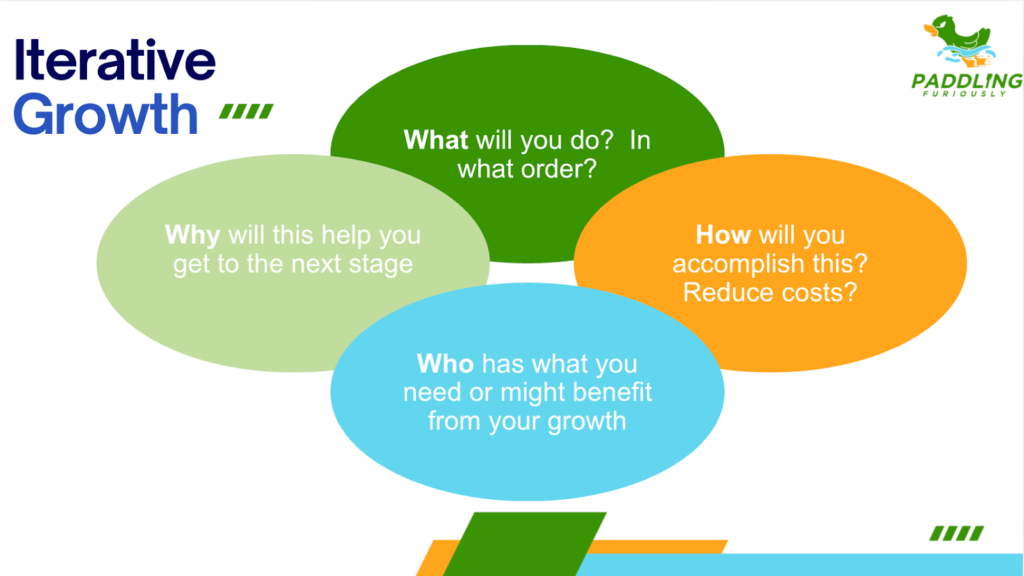
In a smart, efficient growth strategy, launch isn’t a clear-cut, before and after event; it’s a series of steps and phases, a continual process of learning, improving and growing.
What you learn at each stage will inform where and how your business develops, but you still want to have a sense of what that might look like.
Per the chart above, you want to think about:
- What each phase might look like
- What you’re offering, to whom
- What you need to be successful in this step and how you can tap into other resources to reduce the cost and risk of doing so
- Where this will leave you and how it will prepare you to keep growing and moving forward
So: have a plan and a sense of where you’re going, but get out there and do it. It’s the only way to learn.
Useful links:
Launch smart – video explainer
Plan your launch: worksheet
Incubator index: other tools & tips you can use