What Does Your Customer See?
Your organic brand
With everything else you’ve got to do to start a company, who has time for branding? It’s too early; you don’t have the money.
That’s branding: marketing, advertising. Building a brand is different.
Your brand is what customers think about you, how they experience not only your product or service, but all aspects of your company. Your brand exists from the moment you start talking about your plans and accelerates as you launch. Your brand is developing whether you manage it or not. So wouldn’t you rather control the process?
The good news is that this organic brand is built by what customers see and experience. Which means that it doesn’t entail a lot of extra time or spending. What it takes is forethought and planning; you need to think about what those interactions will look and feel like, what you want the customer to take away from them. Happily, this kind of planning not only defines your brand, it strengthens your business.
Operational benefits
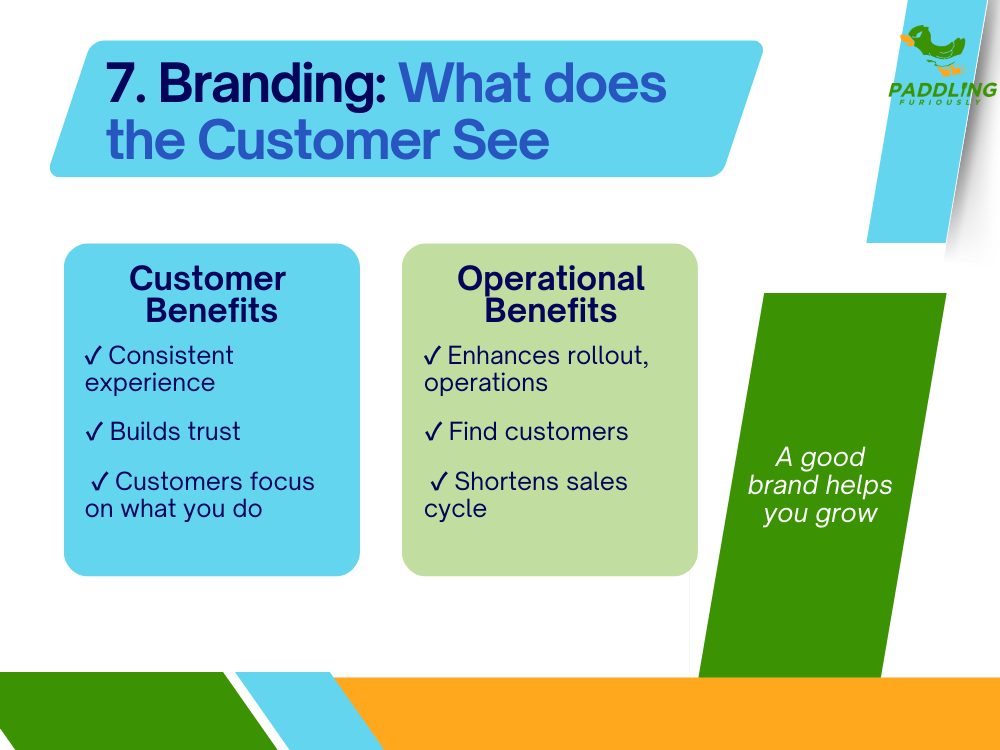
If you think of a brand as decoration, something pretty plunked down on top of your business, think again. A good brand makes you more efficient.
With a defined brand, the customer knows what they’re getting – or is more open to learning:
- Trust: is built when customers experience consistency in every interaction: with you, your employees, your website or social media
- Open to learn: With a better sense of who you are, they’re open to learning more about what you do – and how you can help them
That has clear benefits for you:
- Ease of operations: running a young business is a maze of decisions; if you’ve already determined how things should look or sound, what attributes to emphasize, that eliminates a whole lot of planning, letting you move faster
- Find the right customers: As you know, selling is not just about having a great service or product, it’s about presenting it to the right people in a way that resonates with them. If your brand that underscores your values and approach, it’s easier to find these customers – or have them find you
- Shorter sales cycle: a lot of sales effort goes into building trust, so you can shorten the cycle if your brand does some of this work for you
Building your Brand
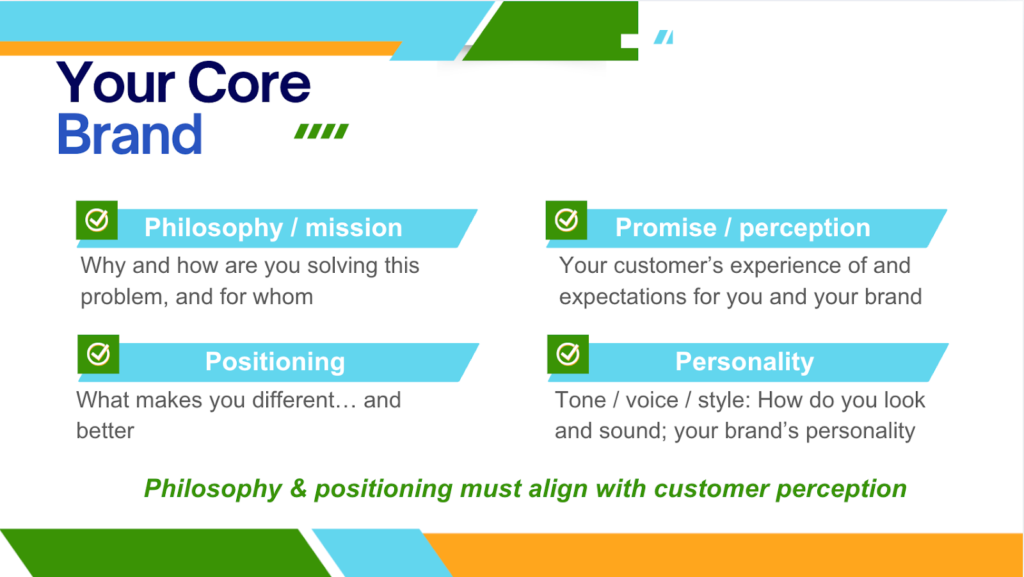
People tend to think of a brand as a logo, maybe a tag line, but it starts much deeper, from your core mission and values, and radiates out from there. Good brands are built on four pillars:
- Philosophy and mission: the same customer value proposition we started with: what are you doing, for whom and why will they care
- Positioning: if you’re solving a problem people care about, others are too. What makes you special, not only in terms of your functionality, but in how you present yourself and interact with customers, how you make them feel or what other less tangible benefits you provide
- Promise and perception: How and how well do you do what you say you’re going to do? Here again, it’s not your opinion that matters: do customers sense your priorities and experience that value as you intended?
- Personality: the presentational aspects of branding – how things look and sound – are important reflections of your company’s values and positioning
It starts with you
It starts with youAs the owner, you are the brand, and this starts before you make the first sale. You’re defining the mission and how it’s accomplished, hiring the people customers will see, finding the channels where they’ll encounter your product or service.
Your messaging – whether it’s on social media, in sales calls, or the way you introduce yourself when meeting someone new – should echo what you want the brand to be. That’s easier if the brand reflects the things that matter to you:
- Why you started, where you’re going
- Why this problem matters to you
- What you’ve learned as you launch
- Who you’ve helped or hope to help
- What they value about you and experience from the company
Brand personality
The brand’s core is built from what you do, how you do it and how people perceive your actions, but there’s also the part that people see: while evaluating or using the product or service, on social media, your website, packaging, everywhere.
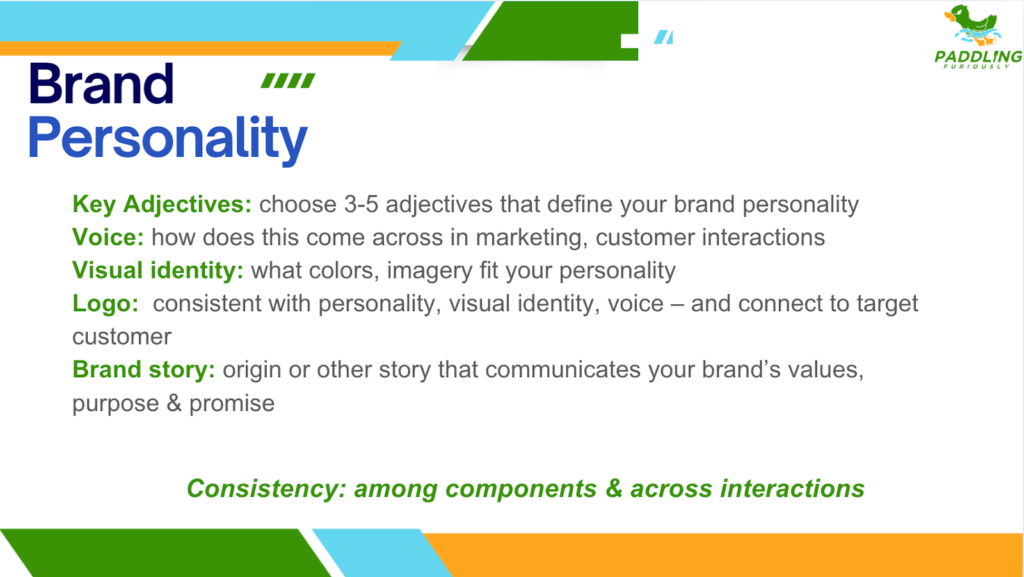
So building a brand isn’t about making something up; it’s about defining attributes that reflect who you are or want to be:
- Key Adjectives: choose 3-5 adjectives that define your brand personality. What’s important to your company? How do you hope customers will describe you?
- Voice: should reflect the way you interact with customers. You aim to be knowledgeable, for example, but does this mean you’re the un unquestioned expert, a knowledgeable but friendly advisor, a peer who’s there to help?
- Visual identity: what colors or imagery align with the brand personality you want to project?
- Logo: combines voice and visual presence. It’s one of the first and most frequent things customers encounter about you. So how does it reflect your goals and values?
- Brand story: how and why did you start this company? What else might communicate your brand’s values, purpose & promise?
Tools and activities to build your brand
We have a worksheet in the “Tools” section to help you define the brand attributes that work for you. In addition, you might want to try some of these activities:
- Tag line: a short introduction to your company and values. “We help [customer] achieve [outcome] by providing [solution/benefit] in a way that’s special because [functional/emotional/social value].”
- Brand welcome kit: define – for yourself and for customers – how you hope they’ll use your product or service and what you hope they’ll experience
- Mood board: collect colors, imagery, fonts or other visual elements that reflect your brand aspirations
- On brand / off brand: what words, phrases or tone resonate with your brand? Which might you avoid?
- Dos & don’ts: what should your brand always – or never – do or express?
- Outside-in: what do customers have to say?
- Testimonials: what themes emerge from customer reviews and feedback?
- Is their perception what you expected? If not, should you incorporate their impressions into your brand identity? Or should you work to correct misimpressions?
Another approach is to simply start by paying more attention to brands around you. Take a closer look at those you interact with. How do you think they’re trying to present themselves? Is that consistent with your experience and expectations of the brand? Why or why not ?
Just going through this thought process will make you more sensitive, helping you build a brand that’s authentic to your company and moves your business forward.
Useful Links
Brand planning example – dog walking
Incubator index: other tips and tools