Are you running your business by outdated rules?
The rules of your business have changed. Not because of AI, technology or the state of the world. The outdated rules may be your own: your business plan.
However you wrote it, whatever form it took, your business plan was instrumental to getting you where you are today. It helped you define your business, set priorities, figure out key essentials and gave you the confidence to launch.
But it was also written for a business that no longer exists. That never existed. It was a hypothetical: what you thought might happen, where you speculated things might go, what you believed customers cared about and how you hoped they might respond.
These were guesses. Educated guesses, but you don’t need guesses any more. Now, you know. For better or worse, you’re living with the reality every day.
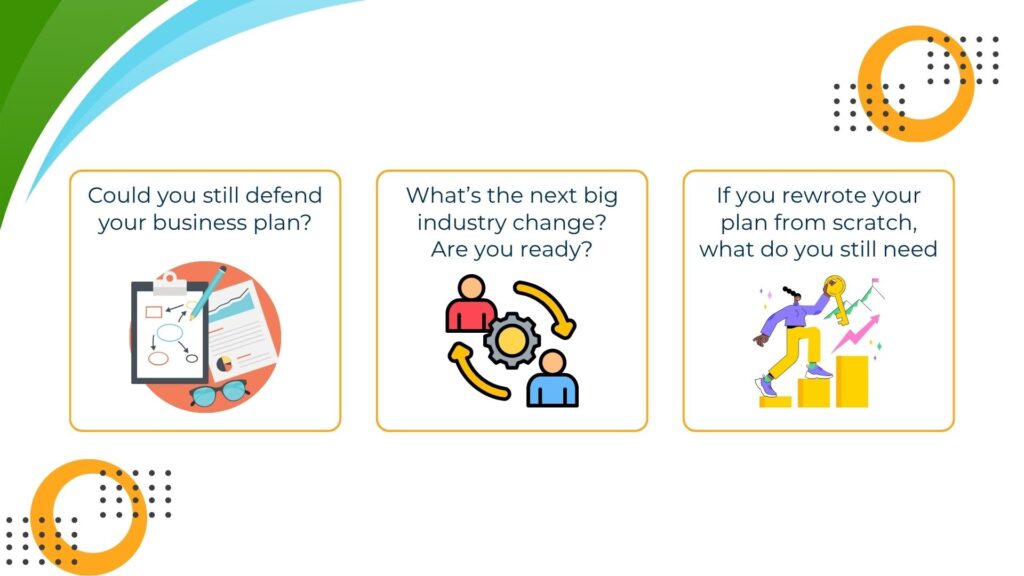
What problem are you solving today that you didn’t even know existed at launch?
No drastic action needed
Don’t worry; there’s no need to ditch the whole plan. And you don’t need to set aside hours you don’t have to rewrite it.
You just need to acknowledge what your plan was… and what it wasn’t. Revisit what was key to your vision then – your mission, the problem you were solving , the way you interact with or contribute to your community – and revise the rest, the things you’ve learned so much about since launch.
Your goals may not have changed; how you get there might. For example, if you wanted to play a specific role or serve a particular purpose in your community and that’s not working, is there another way of achieving the spirit of that goal in a way that’s more consistent with what you know now.
What does “success” mean to you now versus when you started?
Are you doing it right, for the right people?
Your customer is often an area that requires rethinking. It’s ironic, because the customer problem and how you wanted to solve it was probably a central focus when creating your plan.
You’re not alone, because real customers are almost always different from targets:
- That problem you’re targeting, the one customers told you — and truly believed — was the main issue, is often not what’s top of mind or what they’re willing to pay for
- An unexpected type of customer may adopt your solution
- Your target (or another group) may put it to uses you hadn’t quite foreseen
- Your customers, competitors and the market are constantly evolving. The world has changed since you first wrote you plan, introducing new opportunities and challenges
What problem are you solving today that you didn’t even know existed at launch? What problem did you plan to solve that no one ended up caring about?
What (who!) is guiding you?
Post-launch adjustments to customer, product & market expectations are common. They’re also straightforward; if you don’t, you don’t sell.
The voices in your head can be harder to shake. If you were lucky, you had many perspectives to help create your business plan: your own experience as the hapless would-be customer you once were; compelling, convincing target customers you spoke with as part of your research; industry mentor; other founders and business owners. These opinions all helped you form your vision.
Their assistance was immeasurable. But you may now need to let some go, or at least downplay their influence in your ongoing decision-making. They knew what they knew of the business you were building then. They advised you based on what they imagined and understood you were creating.
They gave you the best advice they could. It was helpful in forming your vision, in getting you here. But, however insightful and well-intentioned, it was provided in the past for a business you’re evolving from; it may be less helpful going forward.
What do you have to let go of to update the plan?
Planning for the future
A business plan is written looking forward, toward what might be. By definition, that doesn’t age well. That future you were envisioning when you created the plan is here… and past.
You’ve got to write a plan for the “new” future, the one in front of you now. You need to hold onto the elements that are still useful or inspiring from your plan and be willing to abandon or change what no longer works, either because you’ve learned more or the world has changed.
Most importantly, you need to be looking ahead, creating and revising your plan – and, most importantly, your business – for what you know now and what lies ahead.
A living, evolving plan
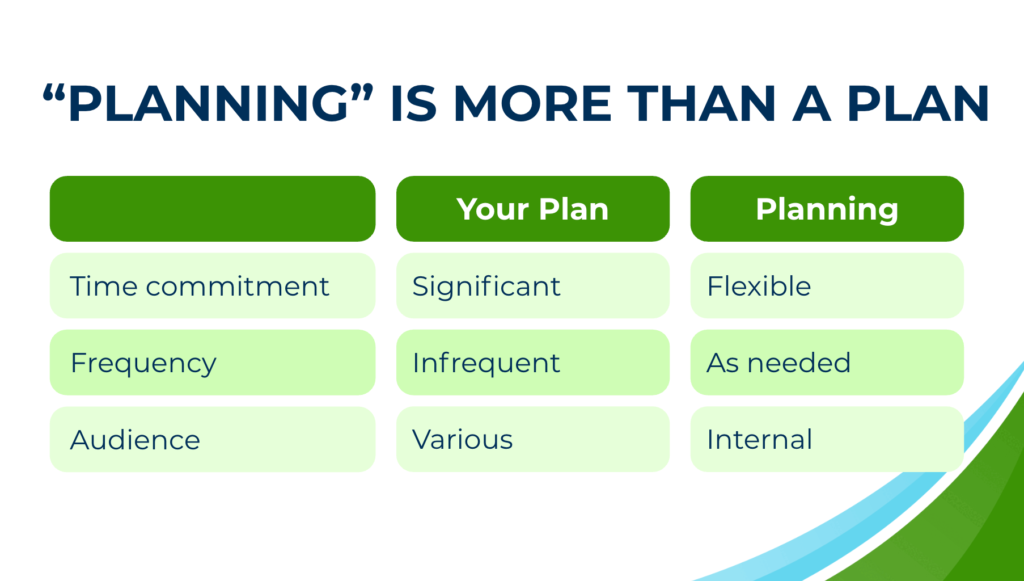
The important elements of your plan aren’t what you wrote in that document all that time ago; it’s what you and your team now know, where your priorities are or should be, where you’re aiming. So you don’t need a whole new plan; you need to be able to focus on what matters to you, in whatever form works for your company.
If you want to periodically revise the plan, do so. But if you prefer to brainstorm, maybe construct some Business Model Canvas scenarios, map things out, reset priorities, use whatever form and frequency works for you.
Because this one’s for you — unlike the original business planning process, where you may have had multiple participants, advisors or constituencies to satisfy,. So design a process that works for your company, your team. The goal is to keep looking ahead while retaining clarity on your goals.
Want more information on growing your business?
Access our full list of questions here, to figure out what may be holding you back and how you can start planning for the future
Need more time for planning? Check out Bootcamp #1: Managing Your Time
Want to make sure you’re focused on real growth? Bootcamp #2: Are Your Growing, or Just Busy?